

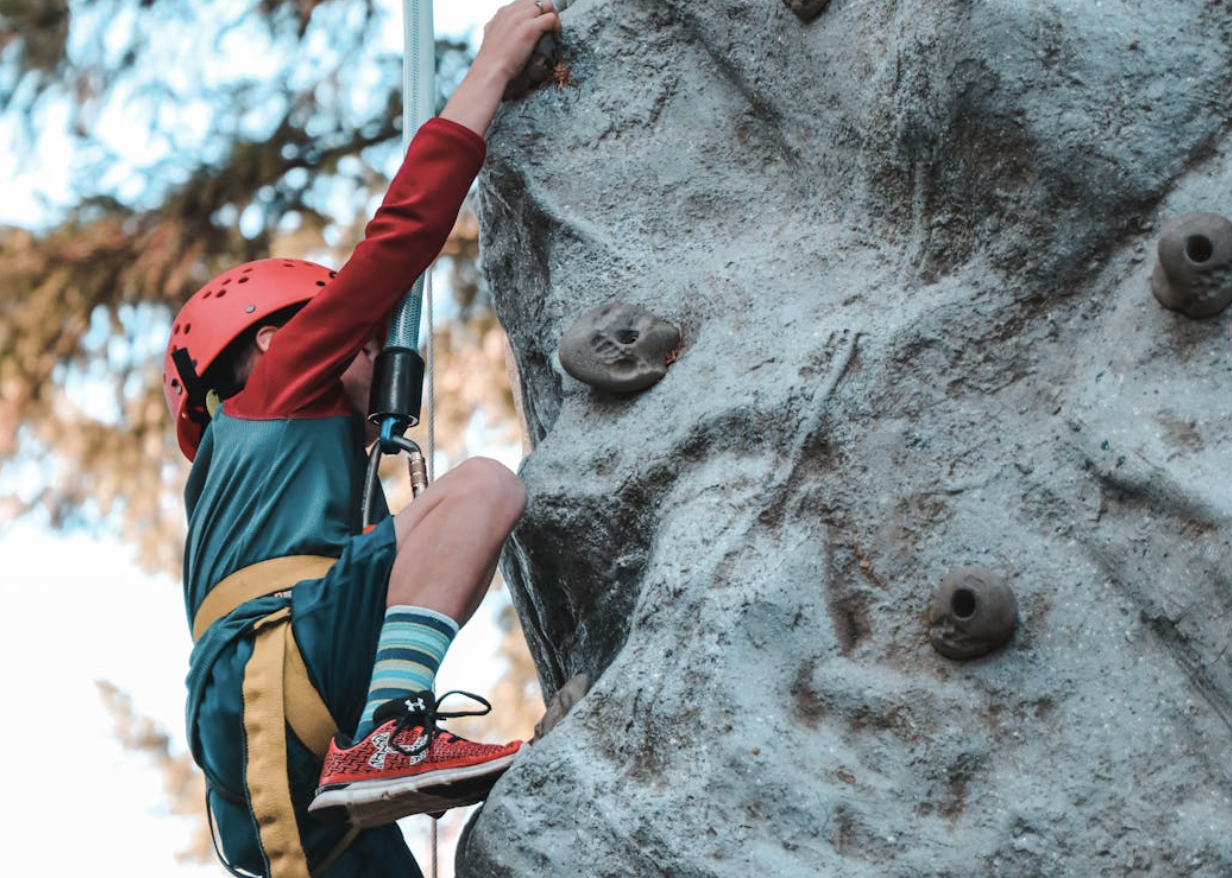
You may want to try climbing, but you have no idea where to start or what you need. Climbing is one of the biggest up-and-coming sports in the UK right now, with climbing centres opening up and down the country, attracting new people every day. But with not much information in the mainstream, it’s hard to know where to start, what equipment you need and some tips and tricks you should know before you start climbing.
Understanding the basics
Climbing is unique compared to other sports as it is a body-weight-based, full-body workout that is adaptable to ability, age, and weather. Most climbing gyms have routes that range from beginner to expert, and bouldering doesn’t need much equipment to start. All you need is shoes rental and maybe some chalk for your first time going.
There are a few climbing terms that you might want to know before you start your first session:
V grades- these are the grades that most climbers are measured by, and they range from V0 to V9 in most gyms, with beginners usually climbing V0 to V3.
Flash- Completing a climb on your first go.
Overhang- These are climbs that are more horizontal and require more strength.
Slabs- These are a type of climb that involves vertical walls with smaller holds and requires balance skills.
Essential gear you need
Climbing shoes- Beginners can rent these at gyms for a small fee of around £3. The key with climbing shoes is a snug fit; they may feel uncomfortable. For your first few months, you may want to opt for a larger size than usual, then slowly descend in size as you progress. After a few months, it’s best to invest in your first beginner’s pair of shoes from Scarpa, La Sportiva or Tenya.
Chalk and chalk bags- Chalk is an essential part of climbing as it helps you to grip into holds by drying skin, whilst also protecting your skin from the rough holds. Chalk usually ranges from £3 to £15 depending on quality. A chalk bag is a great extra and just holds chalk for easy transportation. These can be expensive, so they are not essential.
Safety fundamentals
It’s important to follow certain rules and fundamentals when climbing at the gym, such as ensuring that you’re always looking up so you don’t walk under anyone climbing. This avoids any collisions and is especially important when walking under overhangs.
Also, falling correctly is a major element to perfect when bouldering, specifically as falling badly can cause bad injuries. Firstly, it’s best to always climb down when you have completed a climb, as this avoids jumping onto someone or hurting yourself. If you do fall, it is best not to catch yourself and simply roll backwards. It shouldn’t hurt at all, as there are crash mats; this is the safest way. If you do get injured you can be out of work for months, especially if it’s serious and you have to get surgery and it goes wrong. This may lead to the use of a medical malpractice solicitor and many more months out of climbing.
Key techniques
There are key techniques that you should learn before you start climbing to use less strength and become more efficient when climbing. Some of these include:
Drop knee- This technique involves moving your knees in the opposite direction to the hold that you are aiming to reach, in order to reach the hold more efficiently and more effectively.
Toe hook- A toe hook involves positioning your foot at a 90 degrees angle and hooking a hold in order to keep your body stable and in place.This technique is most common when climbing over hands or at the start of some climb but will not appear until intermediate climbs.
Heel Hook- A heel hook is similar to a toe hook and involves pointing the toe in order to create an angle at the back of the foot to keep the body close to the wall or to try and get over a lip of a hold or a wall.
Crimp- a crimp is a small hold and a grip that involves a specific holding method to be able to hold. A full crimp is when all fingers are on the hold with the thumb warped over the fingers and a half crimp is when just the fingers are on the crimp.
Jug- A jug is a large hold that is relatively easy to hold onto. And can be held with any grip.
Match- A match is when you put both hands on the same hold because it is a difficult hold, usually in order to pull yourself up and reach another hold.
Footswap- A footswap is when you are on a smaller foot hold and you go from standing on one foot to standing on the other, by carefully replacing one foot with another. This can be a trick and takes a lot of patience.
Building strength as a beginner
Building strength as a beginner can be difficult as the muscles that you use when climbing are not usually used in many other sports, however it is possible to build up strength quickly as a beginner. Firstly hang boards are a great way to warm up fingers and also train finger strength. These are wooden boards with different sized holds that can be found in most gyms. Another way to build strength is to just consistently climb. This not only helps to build technique, but it helps to build finger and arm strength at the same time.
Common mistakes to avoid
As a beginner there are a few common mistakes that you should avoid. There are:
Pulling with arms- A mistake that beginners make often is pulling with their arms instead of pushing with their legs. This leads to fatigue and very short climbing sessions as climbers get tired.
Ignoring hips- keeping hips close to the wall is essential as it helps to avoid arm strain and helps you to climb longer. Instead twist your hips to the wall and shift the weight into your legs.
Rushing- Rushing can make moves slopping and ruin technique. Instead make moves slow and deliberate. This gives you time to plan and work out the route before you climb, called route reading and helps you to make better decisions on the wall.
Bad footwork- Using the middle of your foot to climb with is poor footwork, instead ensure to use your toes so you can easily pivot and foot swap if needed.
Over to you
Now you understand a few essentials that you should know before starting your first climbing session, it’s over to you! Grab your favourite activewear and find your nearest climbing centre.